Understanding High Voltage Power Supply for X-ray Tube Systems and OEM

X-ray systems depend on controlled electrical power to produce consistent results. At the center is a high voltage power supply for X ray tube, which provides the electrical conditions required for electron acceleration and X-ray generation. Understanding this power technology is important when developing inspection, medical, analytical, food, electronics, or industrial equipment.
The right power architecture can influence output stability, integration, system size, reliability, and application performance. This makes high-voltage design an important consideration from early product development.
What Does a High Voltage Power Supply Do?
An X-ray tube needs high electrical potential to accelerate electrons toward its target. The power supply generates and regulates the high voltage needed for this process while supporting the operating requirements of the tube. Voltage and current settings influence the energy and quantity of X-rays produced, making controlled electrical output essential for predictable system operation.
See also: Role of Premium Coatings in Enhancing the Lifespan of Metal Roofing
Why Output Stability Matters
Stable high voltage output supports consistent X-ray production. When operating conditions remain controlled, imaging and inspection systems can produce predictable results. This is important in applications where images are used to identify contaminants, inspect internal structures, count components, measure thickness, or analyze materials.
High voltage generator solutions are available across different voltage and current requirements. This allows OEM engineers to select configurations that match their equipment instead of designing every system around the same power level. A suitable generator can help maintain repeatable operation across demanding workflows.
The Role of Voltage and Current
Voltage and current are important parameters when designing an X-ray system. Voltage affects the energy of electrons accelerated within the tube and influences X-ray penetration. Current relates to the number of electrons moving through the tube and influences X-ray output.
The combination depends on the application, tube characteristics, imaging requirements, duty cycle, and complete overall system architecture. Security inspection equipment may require configurations different from medical imaging, industrial NDT, analytical instruments, or food inspection systems. OEMs should evaluate electrical specifications alongside the complete operating environment.
Integrated Versus Separate Components
Traditional architectures may use separate X-ray tubes, high-voltage generators, control electronics, and thermal management components. An integrated approach combines key elements into one compact source.
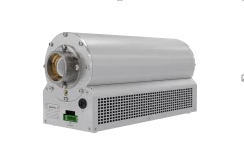
Integrated X-ray sources can incorporate the high-voltage power supply, X-ray tube, and control electronics in a single unit. This can reduce integration complexity and save space. Depending on the design, integrated solutions may also simplify installation and maintenance while providing consistent output.
OEM Integration Considerations
Choosing power technology should begin with the complete equipment requirement rather than a single specification. OEM teams should consider output voltage, current, power, tube compatibility, mounting arrangements, control interfaces, cooling requirements, physical dimensions, and application-specific operating conditions.
Applications Across Industries
High voltage X-ray technology supports a wide range of OEM applications. In security, X-ray systems are used for baggage and parcel inspection, cargo inspection, people screening, portable security inspection, vehicle scanning, and mobile backscatter applications.
Industrial equipment uses X-rays for non-destructive testing, portable inspection, thickness gauging, sorting and recycling, and wood log or board inspection. These applications require dependable output for manufacturing and quality control.
Food inspection systems can use X-rays to identify foreign contaminants such as glass, plastic, and bone fragments. Electronics manufacturers can use X-ray systems for component counting, supporting inventory verification and production workflows.
Medical applications include dental CBCT, bone densitometry, veterinary radiology, irradiation, and radiotherapy. Analytical systems can use X-ray sources for spectrometry, where stable and repeatable output supports material analysis.
Thermal Management and System Reliability
High voltage components operate alongside equipment that can generate substantial heat. Effective thermal management is therefore an important consideration, particularly for higher-power systems or demanding duty cycles.
Compact integrated sources may include thermal management features as part of the overall design. For OEMs, this can simplify the challenge of fitting power, tube, electronics, and cooling requirements into a limited enclosure.
Safety and Shielding Considerations
X-ray equipment requires appropriate engineering controls and compliance with applicable safety requirements. Power supply selection should therefore be considered alongside shielding, enclosure design, control systems, interlocks, thermal management, and the intended operating environment.
Choosing the Right Solution
There is no single configuration suitable for every X-ray application. Engineers should first define the required imaging or inspection task and then establish voltage, current, power, tube, cooling, control, space, and integration requirements.
A solution with suitable output range and compatibility can simplify development. Compact designs can benefit equipment where enclosure space is limited, while scalable voltage and power options can support different application classes. Customization can be valuable when an OEM requires a specific combination of electrical, mechanical, and control characteristics.
Designing for the Complete System
OEM development is easier when electrical and mechanical requirements are considered together. The generator must fit the enclosure, connect with the tube and control architecture, and operate with the required cooling arrangement. Engineers also need to consider service access, production consistency, operating environment, and future revisions. Early coordination between component selection and system design can reduce redesign work and help manufacturers move from prototypes toward repeatable production efficiently.
Matching Power to Application
Applications place different demands on an X-ray source. A compact inspection device may prioritize size and weight, while a fixed industrial system may emphasize output power and continuous operation. Medical and analytical equipment can place greater emphasis on repeatability and controlled operation. Understanding these priorities helps OEM teams identify the appropriate generator or integrated source before engineering begins.
Conclusion
A reliable high voltage power supply for X ray tube systems supports controlled X-ray generation, stable operation, predictable imaging, and effective equipment integration. For OEMs, evaluating voltage, current, power, cooling, shielding, control, and application requirements together can simplify development. The right power solution can support dependable performance across security, industrial, food, electronics, medical, and analytical X-ray applications.
For modern OEM equipment, reliable X-ray technology requires precision, integration, and performance. VJ X-Ray develops integrated X-ray sources and high-voltage generators for VJ X-Ray OEM solutions across security, food, industrial, medical, electronics, and analytical sectors. Its solutions combine X-ray tubes, high-voltage power supplies, control electronics, and related engineering capabilities in compact, customizable configurations. With extensive X-ray and high-voltage design experience, VJ X-Ray supports system integration, product development, and application-specific requirements for diverse systems.