
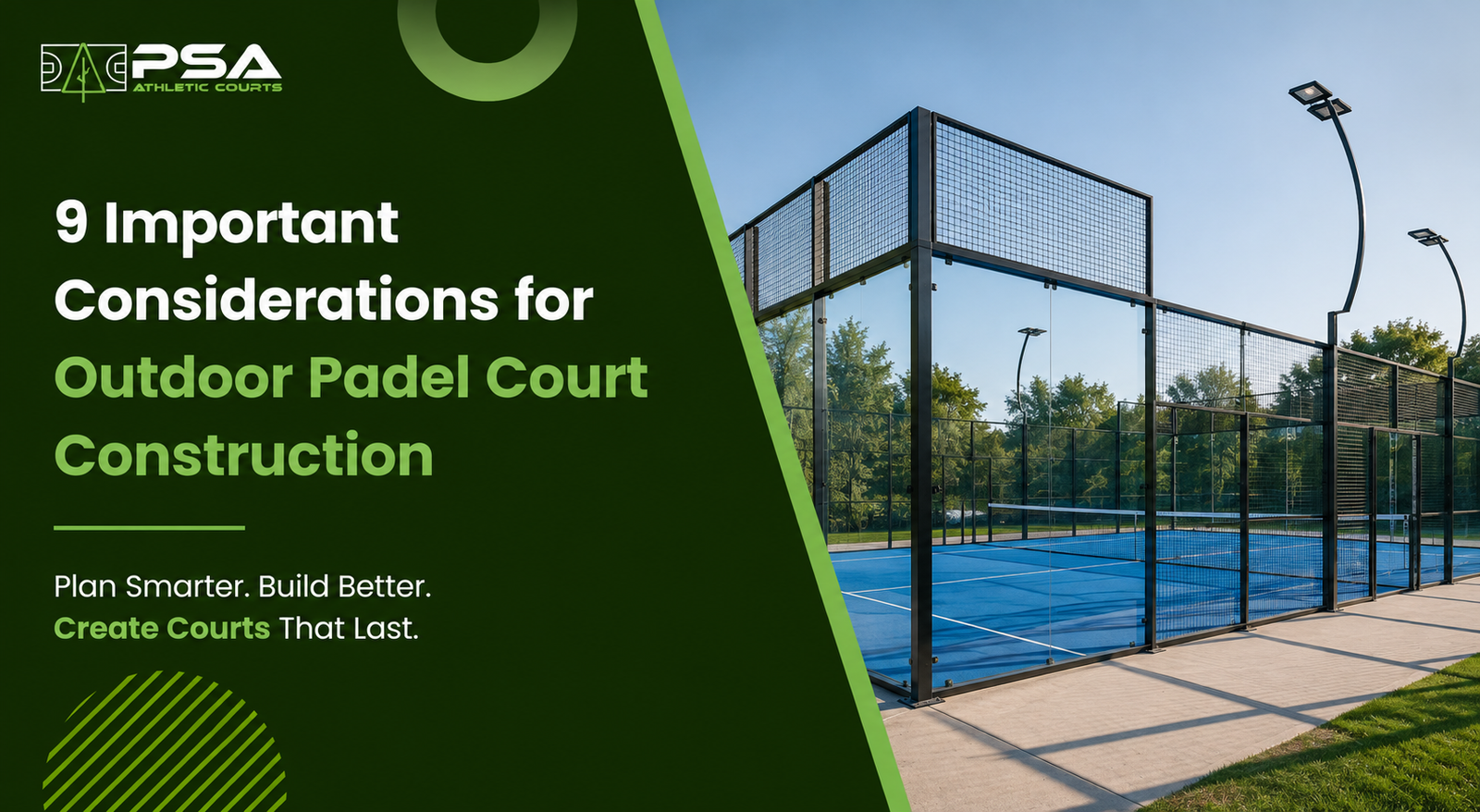
9 Important Considerations for Outdoor Padel Court Construction

Building an outdoor padel court requires more than selecting a playing surface and installing glass panels. From site preparation to drainage and lighting, every element can affect the court’s performance, safety, and durability. If you are planning a residential, commercial, or recreational facility, these nine considerations can help you make informed decisions during padel court construction.
1. Choose the Right Location
The location of your outdoor padel court should provide enough space around the playing area for safe movement, access, and maintenance. Consider:
- Available land and site accessibility
- Nearby buildings, trees, and obstacles
- Sun exposure and prevailing winds
- Access for construction equipment
- Space for lighting and spectator areas
A well-selected site can simplify installation and improve the court’s long-term usability.
2. Understand Padel Court Size Requirements
Knowing how big is a padel court is essential before beginning construction. A standard padel court has an enclosed playing area measuring 10 meters wide by 20 meters long. However, additional space is needed around the court for access, construction, drainage, and other features.
Understanding the required padel court size early helps prevent costly site-planning problems later.
3. Plan an Effective Padel Court Design
A thoughtful padel court design should balance appearance, functionality, safety, and player experience. Think about the placement of glass walls, fencing, entrances, lighting, and surrounding walkways.
For commercial facilities, the design should also consider spectator visibility and convenient access between multiple courts.
4. Prepare a Stable Foundation
The foundation is one of the most important components of successful padel court construction. The site must be properly graded and prepared before the court system is installed.
Proper preparation helps:
- Reduce settlement and movement
- Support the court structure
- Improve surface performance
- Minimize future maintenance issues
5. Prioritize Drainage
Outdoor courts are exposed to rain, so effective drainage should be included in the construction plan. Water should move away from the playing area efficiently rather than collecting beneath or around the court.
Proper grading and drainage can help protect the foundation and extend the lifespan of the court.
6. Select a Durable Playing Surface
The playing surface should provide consistent ball bounce, player traction, and comfortable movement. When selecting a surface, consider local weather conditions, expected usage, maintenance requirements, and overall performance.
A durable surface is particularly important for high-traffic commercial and community facilities.
7. Consider Glass and Enclosure Quality
Glass panels and fencing are defining features of a padel court. They should be selected for durability, visibility, and safety. The enclosure also needs to be installed accurately to create a secure and consistent playing environment.
Working with an experienced padel court designer can help ensure that structural and design requirements are addressed from the beginning.
8. Plan Lighting for Outdoor Play
If the court will be used during evenings, lighting should be incorporated into the design before construction begins. Properly positioned fixtures can provide even illumination while reducing glare and shadows.
Lighting placement should complement the enclosure and avoid interfering with players’ visibility.
9. Plan for Long-Term Maintenance
Construction is only the beginning. Regular cleaning, inspections, surface care, drainage maintenance, and checking structural components can help keep an outdoor padel court in good condition.
Before starting your project, use a detailed padel court construction guide to evaluate the site, materials, drainage, enclosure, lighting, and maintenance requirements.
See also: What Fitness Trackers Show, and What They Don’t
Build a Better Padel Court From the Start
Successful padel court construction depends on careful planning at every stage. By considering padel court size, site conditions, surface selection, drainage, enclosure quality, lighting, and maintenance, you can create a court designed for reliable long-term performance. Working with an experienced padel court designer can also help turn your requirements into a practical and well-planned facility.
