Is Your “Home Court” Making You Worse at Pickleball?

Human beings are creatures of habit. We crave familiarity. We find a coffee shop we like, and we order the same drink every morning. We drive the same route to work. And in the world of pickleball, we tend to gravitate toward the same local park, the same court number, and the same group of four to six friends, week after week.
It feels good. You know exactly how the wind swirls around the fence on the north side. You know that the crack on the baseline of Court 2 causes a weird bounce, so you step around it. You know that “Bob” always lobs when he gets tired, and “Susan” never drives her backhand. You settle into a rhythm. You start winning more games. You feel like you are improving.
But there is a hidden danger in this comfort. While you feel like you are mastering the game, you might actually be trapping yourself in a bubble of stagnation. Your “home court advantage” isn’t just helping you win friendly matches; it might be actively preventing you from becoming a better player.
The “Local Meta” Trap
In gaming and competitive sports, there is a concept called the “meta”—the prevailing strategy used by a specific group of players. When you play exclusively with the same circle of friends at the same facility, you develop a “micro-meta.”
You aren’t learning to play pickleball in a universal sense; you are learning to play your specific group’s version of pickleball.
For example, if no one in your local group has a strong third-shot drop, you never learn to defend against it. You get used to banging away at drives because that works against your friends. If your group plays exclusively with a soft, outdoor ball that drags in the wind, you tune your swing speed to that specific physics engine.
Then, you sign up for a tournament or visit a different city. You step onto a new court. The surface is grittier. The ball is harder. The opponent hits a shot you haven’t seen in six months.
Suddenly, your game collapses. Your muscle memory fails. You realize that your skills were not transferable; they were location-dependent. You weren’t a 4.0 player; you were a “4.0 player at [Insert Park Name] on Tuesday nights.”
The Industrial Mindset: Stress-Testing Your Systems
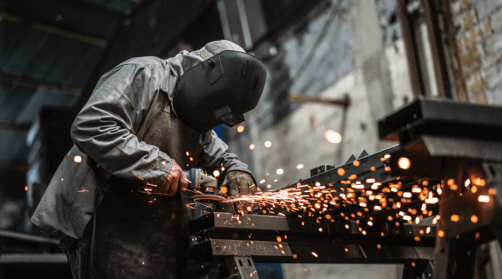
To understand why this happens, we can apply a Global Industrial philosophy to player development. In the industrial world, a machine or a process is not considered reliable until it has been “stress-tested.”
If you build a forklift that only works on perfectly smooth, flat concrete in 70-degree weather, you haven’t built a useful machine. You have built a toy. A truly industrial-grade machine must function in the heat, in the cold, on rough terrain, and under heavy loads.
Your pickleball game is the same. To build a game that travels—one that commands respect regardless of the zip code—you need to expose it to variables. You need to stress-test your mechanics in unfamiliar environments.
When you play at a new facility, your brain goes into hyper-drive. You cannot rely on subconscious cues anymore. You have to actively read the ball. You have to analyze the wind. You have to decipher the opponent’s body language in real-time because you don’t have a dossier on their habits.
This state of heightened awareness is where true learning happens. It forces you to strip away the “cheats” you use at your home court and rely on sound, fundamental mechanics.
The Surface Variable
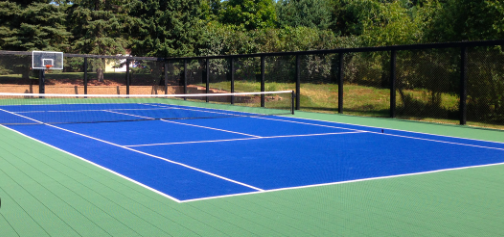
One of the most overlooked factors in pickleball is the court surface itself. Not all hard courts are created equal.
Some courts have a heavy grit texture that grabs the ball, allowing for aggressive spin. Others are worn smooth, causing the ball to skid low and fast. Some are concrete; others are specialized athletic tiles.
If you only play on one surface, your brain calibrates your bounce prediction to that specific friction coefficient. When you travel to a new venue, your timing will be off. You will swing too early or too late.
By becoming a “court nomad”—intentionally seeking out different venues to play—you train your eye to recognize these variables instantly. You learn to adjust your backswing for a skidding ball. You learn to close the paddle face for a high-bouncing grit court. You become adaptable. And in a sport as fast as pickleball, adaptability is the highest form of skill.
The Social stagnation vs. The Network Effect
Beyond the mechanics, there is a social cost to the home court trap. Pickleball is unique because it is inherently social. It is the golf of the 21st century—a major engine for networking and community building.
When you stay in your silo, you limit your network. You limit your exposure to different coaching tips, different gear recommendations, and different perspectives on strategy.
Visiting a new facility is like opening a window in a stuffy room. You meet players who learned the game in a different region. Maybe they play a “western grip” style that is popular in Arizona but rare in Florida. Playing against that style forces you to solve new puzzles.
Furthermore, the vibe of different facilities varies wildly. Some are intense and competitive “fight clubs.” Others are laid-back social hubs with music and food. Some are indoors with perfect lighting and acoustics; others are outdoors, battling the elements. Experiencing this spectrum reminds you why you love the game. It prevents burnout. It turns pickleball from a routine exercise into an adventure.
Breaking the Cycle
So, how do you escape the trap? You don’t have to quit your home court. It’s good to have a base. It’s good to have friends. But you need to introduce a “20% Rule.”
Make a commitment that 20% of your playing time will happen in a new location.
- Drive 30 minutes: Find the next town over’s public courts.
- Join a Round Robin: Sign up for a randomized event where you can’t pick your partner.
- Play Indoors: If you are an outdoor player, find a gym. If you are an indoor player, brave the sun.
Treat these excursions as “field research.” Don’t worry about winning or losing these games. Worry about how your shots are translating. Are your drives landing in? Is your dink holding up?
Conclusion
The comfort zone is a beautiful place, but nothing grows there. If you want to transform your pickleball game from fragile to industrial-grade, you have to be willing to be uncomfortable. You have to be willing to be the stranger who doesn’t know which way the wind blows.
By actively seeking out new courts and new communities, you stop being a creature of habit and start being a student of the game. You build a resilience that allows you to step onto any court, anywhere in the world, and say, “I can play here.”
If you are ready to break out of your bubble and find your next challenge, you need a resource that connects you with the best facilities and communities in the sport. When you decide to Visit FLiK Pickleball, you are opening the door to a wider world of play, ensuring that your game travels just as well as you do. Pack your paddle, hit the road, and see how good you really are when the home court advantage is gone.