Securing Harsh Industrial Environments with Specialized Network Firewalls

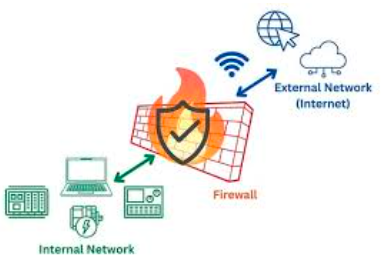
The convergence of Information Technology (IT) and Operational Technology (OT) has revolutionized industrial sectors. Manufacturing plants, electrical substations, and transportation networks are becoming increasingly connected to drive efficiency and predictive maintenance. However, this connectivity introduces significant risk. Critical infrastructure that was once air-gapped is now exposed to the internet and corporate networks, creating pathways for cyberattacks. Securing these environments requires more than just software logic; it demands hardware that can survive where standard IT equipment would fail. In the sweltering heat of a foundry or the freezing cold of a remote pipeline station, protecting the digital edge requires specialized, ruggedized network firewalls.
The Physical Challenge of Industrial Zones
Standard enterprise firewalls are designed for climate-controlled data centers with stable power and clean air. If you place a standard rack-mount appliance in a factory floor cabinet, it will likely fail due to dust ingress, vibration from heavy machinery, or extreme temperature fluctuations. A hardware failure in an industrial setting does not just mean a lost email server; it can mean a halted production line, a power outage, or a safety incident.
To mitigate these risks, critical infrastructure relies on hardware engineered for ruggedized firewall industrial network protection. These appliances are built with hardened casings to resist impact and electromagnetic interference. They utilize passive cooling systems to eliminate fans-a common point of failure in dusty environments-and are rated to operate in temperatures ranging from sub-zero to extreme heat. This physical resilience ensures that the security gatekeeper remains operational 24/7, regardless of the environmental hostility.
Deep Packet Inspection for OT Protocols
Industrial control systems speak their own languages. Protocols like Modbus, DNP3, and BACnet were designed decades ago with a focus on reliability rather than security. They often lack authentication or encryption, meaning any command sent to a machine is trusted by default. A standard IT firewall sees this traffic but typically does not understand it, treating it as opaque data.
Specialized industrial firewalls possess “OT awareness.” They perform Deep Packet Inspection (DPI) specifically for industrial protocols. This allows them to validate not only the connection but also the command’s content. For example, the firewall can be configured to allow a “read” command (to check a temperature sensor) but block a “write” command (to change the temperature setpoint) coming from a specific IP address. This granular control is essential for preventing attackers from manipulating physical processes. provides comprehensive guidelines in their “Guide to Industrial Control Systems Security” on how DPI enhances control system defense.
The Purdue Model and Network Segmentation
In many legacy industrial environments, the network is “flat.” This means that if a malware infection occurs on a workstation in the control room, it can spread unimpeded to the Programmable Logic Controllers (PLCs) on the factory floor. Security best practices dictate the implementation of the Purdue Model, a hierarchical framework for network segmentation.
Rugged firewalls serve as the enforcement points between these layers. They create “demilitarized zones” (DMZs) that strictly control traffic flow between the corporate IT network and the sensitive OT production zones. By micro-segmenting the industrial network, the firewall ensures that a breach in one cell of the factory cannot spread to others, containing the blast radius of any cyber incident.
Virtual Patching for Legacy Systems
Industrial equipment is built to last for decades. It is common to find machines running outdated operating systems like Windows XP because the control software cannot run on newer systems. Patching these systems is often impossible due to vendor restrictions or the risk of downtime.
Industrial firewalls address this vulnerability through “virtual patching.” The firewall sits in front of the vulnerable legacy asset and inspects incoming traffic for known exploit signatures. If an attacker attempts to send a packet exploiting a specific Windows XP vulnerability, the firewall identifies and drops it before it reaches the machine. This allows organizations to secure aging infrastructure without the operational risk of taking systems offline for updates. The International Society of Automation (ISA) develops the ISA/IEC 62443 standard, which is the global benchmark for implementing these defensive layers in automation systems.
Secure Remote Access for Maintenance
The days of flying an engineer to a remote site to press a button are ending. OEMs and maintenance teams increasingly require remote access to troubleshoot equipment. However, allowing third-party vendors into the OT network poses a significant security risk if not managed properly.
Rugged firewalls facilitate secure remote access via encrypted VPN tunnels. They allow organizations to create specific policies that grant a vendor access only to the specific machine they need to service, and only during a scheduled maintenance window. This ensures that the benefits of remote diagnostics do not come at the cost of network integrity.
Conclusion
Securing harsh industrial environments is a dual challenge of physical resilience and digital intelligence. It requires firewalls that are tough enough to survive on an oil rig yet smart enough to decode complex automation protocols. By deploying ruggedized hardware that enforces segmentation, applies virtual patches, and strictly controls remote access, organizations can bridge the IT/OT gap. This ensures that the critical infrastructure powering our economy remains safe, efficient, and resilient against the growing wave of cyber threats targeting the industrial sector.
Frequently Asked Questions (FAQ)
1. What makes a firewall “rugged”?
A rugged firewall is built with industrial-grade components to withstand harsh conditions. It typically features a fanless design to prevent dust intake, high vibration resistance, and the ability to operate over a wide temperature range (e.g., -40°C to 75°C).
2. Why can’t I use a standard IT firewall for industrial protocols?
Standard IT firewalls often do not support OT protocols such as Modbus or Ethernet/IP. They can allow the connection, but they cannot inspect the commands in the packets to determine whether they are malicious or dangerous to the physical process.
3. What is the biggest security risk in OT environments?
The convergence of IT and OT networks is a major risk. As previously isolated industrial networks are connected to the internet for data analysis, they become accessible to hackers who can exploit unpatched legacy systems that were never designed to face modern cyber threats.