How Accident Reconstruction Experts Prove Fault in Severe Crashes

Severe crashes leave damaged vehicles, serious injuries, and disputed accounts of what happened. Accident reconstruction experts turn physical evidence into a tested sequence of events. Their analysis addresses speed, impact angles, driver actions, braking, and roadway conditions. Attorneys, insurers, judges, and juries use those findings to assess responsibility. The process starts at the crash scene and continues through vehicle inspections, data analysis, calculations, and independent review before issuing an opinion.
Severe collisions often involve disputed lane changes, unclear traffic signals, or multiple impacts. Investigators examine catastrophic wrecks through measurable evidence rather than assumptions. That evidence can show where each vehicle traveled, when braking began, whether a driver had time to react, and how the first impact caused later damage.
Scene Evidence Establishes The Starting Point
An accident reconstruction begins with the scene, vehicles, photographs, roadway marks, and available records. Investigators document vehicle positions, debris patterns, tire marks, road grades, lane widths, signs, signals, lighting, and visibility.
Photogrammetry converts photographs or video into measurements. Survey equipment records distances, angles, and elevation changes. Together, these measurements create a scaled representation of the roadway and preserve conditions that disappear after vehicles move or repairs begin.
Tire marks provide evidence about braking, steering, and loss of control. Skid marks show where a tire stopped rotating during hard braking. Yaw marks can indicate that a vehicle traveled sideways while maintaining tire contact. Investigators compare those marks with vehicle damage and roadway geometry.
Vehicle Damage Reveals Impact Mechanics
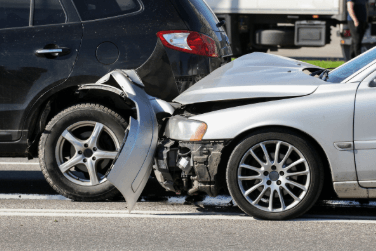
A vehicle’s damage pattern shows how forces acted during the collision. Experts inspect crush depth, deformation direction, contact points, broken parts, and damage height. They compare those details with the other vehicle’s structure and reported movement before impact.
This analysis identifies whether vehicles struck head-on, at an angle, during a sideswipe, or after an earlier collision. Damage can also show whether a vehicle rotated, rolled, or suffered a secondary impact with a barrier, tree, or another vehicle.
Crush measurements help estimate the energy absorbed during impact. Experts combine those measurements with vehicle weights, road evidence, and post-impact movement. The estimate depends on the quality and completeness of the available evidence.
Electronic Data Tests Driver Accounts
Many vehicles store event data through an event data recorder. The information can show speed, braking, throttle position, seat-belt use, and other vehicle conditions immediately before and during a crash.
Investigators compare recorded data with physical evidence. If a driver reports braking for several seconds, the recorder and tire marks should support that account. If the records show no braking before impact, that detail changes the reconstruction and raises questions about attention, visibility, or reaction time.
A recorder does not explain every cause by itself. It documents vehicle activity, not every human decision. Experts still examine roadway conditions, traffic control, sight distance, distraction evidence, and the time required for a reasonable response.
Calculations Reconstruct The Timeline
Accident reconstruction uses physics to sequence events. Experts calculate speed changes, momentum, stopping distance, reaction time, and post-impact vehicle movement. They compare those calculations with photographs, scene measurements, and electronic records.
Momentum analysis examines how vehicles transferred motion during a collision. Energy analysis helps assess the force required to create observed movement and damage. Neither method replaces physical evidence because inaccurate weights, missing marks, or incomplete vehicle inspections can affect the result.
A reliable opinion explains each assumption. The expert identifies the information used, the calculations performed, and the limits of the conclusion. Decision-makers can then assess whether the opinion rests on documented facts rather than speculation.
Visibility And Reaction Time Matter
Fault often depends on whether a driver had enough time to perceive a hazard and respond. Reconstruction experts assess sight distance, lighting, weather, roadway curvature, obstructions, and each vehicle’s position.
They calculate the time between hazard recognition and impact. That period includes perception, decision-making, and physical braking. A driver with a clear view and sufficient distance faced different circumstances from one whose view remained blocked until the final moment.
Experts also test alternate timelines. They might examine what happened if a vehicle traveled slower, entered a lane earlier, or began braking sooner. These comparisons show whether another action could have avoided the collision or reduced its severity.
Experts Explain Fault In Clear Terms
A technical reconstruction matters only when decision-makers can follow it. Qualified experts use diagrams, photographs, measurements, animations, and plain explanations to connect evidence with conclusions.
Their reports distinguish facts from assumptions. They identify disputed points and explain which evidence supports each version of events. During testimony, an expert must answer questions about the inspection, calculations, data sources, and possible errors.
The final opinion does not decide legal fault. It explains how the crash occurred and whether physical evidence supports one account over another. Attorneys, insurers, judges, and juries then apply the relevant legal standard.
Conclusion
Fault in a severe crash rests on a defensible chain of evidence. Reconstruction experts build that chain by preserving the scene, analyzing vehicle data, measuring damage, testing competing timelines, and clearly explaining their findings. Their conclusions do not replace legal judgment, but they give decision-makers a technical basis for assessing responsibility. After a serious collision, preserve vehicles, photographs, electronic records, and witness details before repairs or evidence loss changes the case.